Did you know that more than one in four homes tested in Rhode Island has radon levels considered a health risk by the Environmental Protection Agency (EPA)?
Radon is an invisible, odorless radioactive gas that can enter homes without homeowners realizing it. Long-term exposure to elevated radon levels can increase the risk of lung cancer, making radon testing an important part of protecting your family's health.
According to the Rhode Island Department of Health, the state's average radon level is nearly three times the national average.
With Rhode Island's new radon testing law taking effect June 1, 2027, understanding radon is becoming even more important for homeowners, homebuyers, sellers, and real estate professionals.
At HouseMaster Home Inspections Serving Newport–Providence, RI, we help Rhode Island families make informed decisions about their homes through professional radon testing and home inspection services.
What Is Radon, and Why Is It Dangerous?
Radon is a naturally occurring radioactive gas produced by the breakdown of uranium and other radioactive materials in soil and rock.
It can enter a home through cracks in the foundation, openings around plumbing pipes, sump pits, crawlspaces, and other pathways.
Because radon has no smell, color, or taste, there is no way to detect elevated levels without testing.
The EPA identifies radon as the second leading cause of lung cancer in the United States, after smoking, and the leading cause of lung cancer among people who have never smoked.
Long-term exposure is particularly concerning because radon generally does not cause immediate symptoms.
The only way to know your home's radon level is to test.
Rhode Island Radon Statistics: What Homeowners Should Know
Rhode Island has a significant radon exposure concern.
According to the Rhode Island Department of Health:
- More than 1 in 4 homes tested in Rhode Island has radon levels considered a health risk by the EPA.
- Approximately 1 in 15 homes nationally is estimated to have elevated radon levels.
- Rhode Island's average radon concentration is nearly three times the national average.
- In Exeter and Richmond, more than 50% of homes tested in the state's 2021 radon data exceeded the EPA action level.
These statistics demonstrate why radon testing should be considered by homeowners throughout Rhode Island, regardless of where they live.
Although certain communities have higher percentages of elevated test results, no Rhode Island neighborhood can be assumed to be radon-free.
Even neighboring homes can have very different radon concentrations.
Source: Rhode Island Department of Health, Radon Program and 2021 Radon Data.
New Rhode Island Radon Testing Law: What Changes June 1, 2027?
Rhode Island enacted a new radon testing law in June 2026, establishing additional requirements for most residential real estate transactions.
Beginning June 1, 2027, most residential properties being sold in Rhode Island will require radon testing unless a statutory exemption applies.
The law, Rhode Island General Laws § 5-20.8-14, includes several important requirements.
1. Mandatory Radon Testing
For covered residential transactions with purchase and sale agreements executed on or after June 1, 2027, a radon test must be completed no earlier than one year before closing.
Testing must be performed by an appropriately certified or licensed professional following applicable testing protocols.
2. Disclosure of Radon Test Results
Radon test results must be provided to the buyer, seller, and any lender designated by the buyer.
This helps ensure that parties involved in the transaction are informed about the property's radon levels.
3. Radon Mitigation Requirements
When testing identifies radon levels exceeding the statutory threshold of 4.0 picocuries per liter (pCi/L), the law requires a radon mitigation system to be installed by a certified or licensed professional before closing, when possible.
If installation cannot be completed before closing, the estimated mitigation cost must be placed in escrow until the work is completed, subject to the agreement required by the law.
4. Who Pays for Radon Testing?
Unless the parties agree otherwise, the buyer generally pays for radon testing performed after the purchase and sale agreement is executed if the seller has not provided a qualifying recent certified test showing no unsafe radon level.
5. Are There Any Exemptions?
Yes. The law provides exemptions for certain transactions, including qualifying properties with existing radon mitigation systems, some foreclosure-related transfers, inherited properties, and other specified circumstances.
What does this mean for Rhode Island homebuyers and sellers?
Radon testing will become a more standardized part of the real estate transaction process. Buyers and sellers should discuss testing requirements, timing, and any necessary mitigation with their real estate professionals.
Homeowners do not need to wait until the law takes effect to test their properties.
Source: Rhode Island General Laws § 5-20.8-14, enacted June 18, 2026.
Can Any Home in Rhode Island Have Elevated Radon Levels?
Yes. Radon is not limited to older homes or properties with basements.
Elevated radon levels can occur in:
- Historic homes with stone foundations
- Newly constructed homes
- Homes with concrete slab foundations
- Homes with crawlspaces
- Homes with finished or unfinished basements
- Energy-efficient homes with limited natural ventilation
A home's age, appearance, and location cannot reliably predict its radon concentration.
Whether you own a historic home in Newport, a colonial in Providence, or a newer property in East Greenwich, testing is the only reliable way to determine the radon level inside your home.
How Does Professional Radon Testing Work?
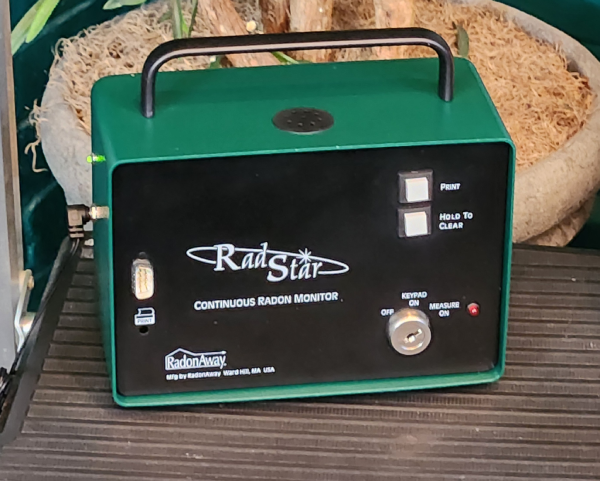
HouseMaster Home Inspections Serving Newport–Providence, RI offers professional radon testing using continuous radon monitoring equipment.
During a typical short-term real estate radon test, a monitor is placed in an appropriate location inside the home for a minimum of 48 hours.
The monitor records radon concentrations during the testing period.
Proper testing conditions are important. For standard short-term testing, windows and exterior doors generally must remain closed, except for normal entry and exit, for at least 12 hours before testing begins and throughout the test.
After the test is completed, the results are reviewed and provided to the client.
If elevated radon levels are detected, additional testing or evaluation by a qualified radon mitigation professional may be recommended.
What Radon Level Is Considered Unsafe?
Radon concentrations are measured in picocuries per liter of air (pCi/L).
The EPA recommends taking action to reduce radon concentrations at 4.0 pCi/L or higher and considering mitigation at levels between 2.0 and 4.0 pCi/L.
There is no known completely risk-free level of radon exposure.
|
Radon Level |
EPA Recommendation |
|
Below 2.0 pCi/L |
Lower risk, but not risk-free |
|
2.0–3.9 pCi/L |
Consider mitigation |
|
4.0 pCi/L or higher |
Take action to reduce radon |
Radon concentrations can fluctuate with weather conditions, seasonal changes, and ventilation. Follow-up testing may be appropriate depending on the initial results.
What Happens If Elevated Radon Levels Are Found?
Finding elevated radon levels does not necessarily mean a home is unsafe to purchase or occupy permanently.
Radon mitigation systems can often significantly reduce indoor radon concentrations.
A common mitigation method involves installing a system that draws radon-containing soil gas from beneath the foundation and safely vents it outdoors.
A Rhode Island-licensed radon mitigation contractor should evaluate the property and recommend the appropriate solution.
After mitigation, the home should be retested to verify that the system is effectively reducing radon levels.
Should You Test Your Home If You're Not Selling?
Yes. Radon testing is valuable for homeowners even when no real estate transaction is planned.
Consider testing if:
- You have never tested your home for radon.
- You recently purchased a home without radon testing.
- You have completed significant renovations or foundation work.
- You have converted a basement into living space.
- Your home has an existing mitigation system that needs performance verification.
- It has been several years since your last test.
Testing can help identify a potential health concern before years of additional exposure occur.
Protect Your Family with Radon Testing in Rhode Island
Your family's health and safety should always be a priority.
With more than one in four tested Rhode Island homes showing elevated radon levels, testing is an important step toward understanding the indoor environment of your home.
Whether you're buying, selling, or simply maintaining your property, professional radon testing can provide information that helps you make informed decisions.
And with Rhode Island's new radon testing law taking effect June 1, 2027, understanding your property's radon levels is more important than ever.
Schedule Professional Radon Testing with HouseMaster
At HouseMaster Home Inspections Serving Newport–Providence, RI, we provide professional radon testing and comprehensive home inspection services to help homeowners and homebuyers better understand their properties.
We serve Providence, Newport, Warwick, East Greenwich, North Kingstown, Jamestown, Barrington, Bristol, Warren, Portsmouth, Middletown, Tiverton, Little Compton, East Providence, North Providence, and surrounding Rhode Island communities.
Website: https://housemaster.com/593
Schedule Online: https://inspectionsupport.com/hm-pmiranda/online-scheduler
Don't wait until you're buying or selling a home. Schedule your radon test and take an important step toward protecting your family's health.
Sources and Additional Information
- Rhode Island Department of Health: https://health.ri.gov/radon
- Rhode Island Radon Data: https://health.ri.gov/data/radon-data
- Rhode Island's 2026 Radon Law: https://webserver.rilegislature.gov/PublicLaws/law26/law26102.htm
- U.S. Environmental Protection Agency: https://www.epa.gov/radon